
Cavity Sliding Door Detail (Construction, Frame & Wall Section Guide)
A cavity sliding door detail shows how a sliding door system is constructed inside a wall cavity. These construction details are commonly used by builders, architects and installers when planning a cavity slider system.
Unlike surface sliding doors, a cavity sliding door disappears into a wall pocket. This requires a dedicated cavity frame, track system and reinforced wall structure.
Understanding the correct construction detail helps ensure smooth door operation, correct wall framing, proper track installation and sufficient wall cavity clearance.
This guide explains the complete cavity sliding door detail, including the frame system, track components, wall construction and typical Australian dimensions used for cavity sliders.
For a full overview of cavity systems, see our guide to cavity sliders in Australia.
What Is a Cavity Sliding Door Detail?
A cavity sliding door detail refers to the structural and mechanical layout of a sliding door system installed inside a wall cavity.
The detail typically includes:
- cavity door frame
- overhead track system
- door rollers
- stud framing
- wall lining such as plasterboard
- door stop mechanisms
Architects, builders and installers use these details to ensure the door pocket is correctly integrated into the wall structure.
If you are new to cavity systems, read our guide on what a cavity slider door is.
Main Components of a Cavity Sliding Door System
A standard cavity sliding door detail includes several key components that work together to create a smooth and durable sliding door system.
Cavity Frame
The cavity frame forms the structure that allows the door to slide inside the wall. High-quality systems use reinforced aluminium or steel frames designed to maintain wall rigidity and provide long-term performance.
Track System
The overhead track supports the door weight and allows smooth sliding operation. A typical track system may include:
- aluminium track
- adjustable hangers
- nylon or ball-bearing rollers
- door stops
- soft-close components where applicable
Door Panel
The door panel slides along the track and disappears into the cavity pocket. Door thickness commonly ranges between 32mm and 40mm depending on the system and application.
Stud Structure
The cavity frame replaces standard wall studs and provides a reinforced structure that reduces movement and keeps the wall aligned during use.
To explore available system options, view our 65mm cavity slider systems, 125mm cavity slider systems and 150mm cavity slider systems.
Cavity Sliding Door Wall Construction
A cavity slider requires a modified wall structure compared with a standard hinged door. The wall must be built to accommodate both the door panel and the sliding mechanism inside the cavity.
Typical wall construction includes:
- top plate and bottom plate
- cavity frame structure
- track mounting section
- sliding door pocket space
- finished wall lining such as plasterboard
The wall thickness must allow enough clearance for the door panel and hardware to operate correctly without friction or binding.
In Australia, cavity slider systems are commonly designed for wall and frame formats such as 65mm, 125mm and 150mm systems, depending on the application and structural requirements.
For exact sizing guidance, see our page on cavity slider sizes.
Typical Cavity Sliding Door Detail Diagram
A standard cavity slider detail drawing usually shows:
- the cavity frame
- the overhead sliding track
- the roller system
- the pocket space inside the wall
- the finished wall lining
- door clearance and stop positions
These diagrams help installers and specifiers understand how the door travels inside the wall cavity while maintaining wall alignment and structural integrity.
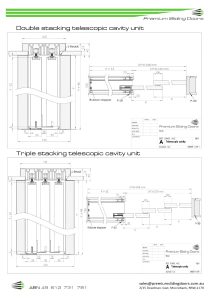
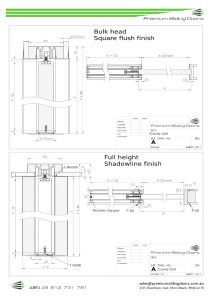
Full cavity sliding door detail drawings (Download PDF)
Standard Cavity Slider Dimensions
Cavity sliding doors are available in a range of sizes depending on wall thickness, door width and the frame system selected.
Typical Australian systems include:
- Premium 65 cavity slider systems
- Premium 125 cavity slider systems
- Premium 150 cavity slider systems
These systems are designed to suit standard door sizes and common stud wall construction used in Australian residential and commercial projects.
For more detail, visit our full guide to standard cavity slider sizes.
Installation Considerations
Correct installation of a cavity slider system requires accurate wall framing, proper track alignment and sufficient structural support around the opening.
Important installation considerations include:
- level track installation
- correct door clearance
- reinforced wall framing
- roller adjustment
- smooth door travel from open to closed position
For a full step-by-step guide, read how to install a cavity slider door.
Aluminium Cavity Sliding Door Systems
Modern cavity sliding doors commonly use aluminium frame systems for improved strength, smoother operation and long-term durability.
Aluminium systems offer several advantages:
- improved structural rigidity
- smoother sliding performance
- higher load capacity
- better long-term corrosion resistance
- suitability for modern Australian construction requirements
If you are selecting a system for your next project, explore our range of premium cavity slider categories:
Conclusion
A well-prepared cavity sliding door detail is essential for correct wall construction, reliable installation and smooth long-term door performance. Whether you are specifying a system, planning a build or selecting the right frame, understanding the relationship between the cavity frame, wall structure and track system is critical.
For broader guidance, visit our main page on cavity sliders in Australia or browse our premium cavity slider systems.
Related Cavity Slider Guides
- What is a cavity slider door
- Standard cavity slider sizes
- How to install a cavity slider door
- Cavity sliders in Australia guide
Frequently Asked Questions
What is a cavity sliding door detail?
A cavity sliding door detail shows how a sliding door system is installed inside a wall cavity, including the frame, track system and wall construction.
What wall thickness is required for a cavity slider?
Cavity slider systems are commonly designed around different wall and frame configurations such as 65mm, 125mm and 150mm systems, depending on the application and construction method used.
What components are included in a cavity slider system?
A cavity slider system typically includes a cavity frame, overhead track, rollers, door panel and structural wall framing components.